
Learn what cybersecurity careers really involve, how much they pay, and how to enter the field through certificates, associate degrees, or career pivots.
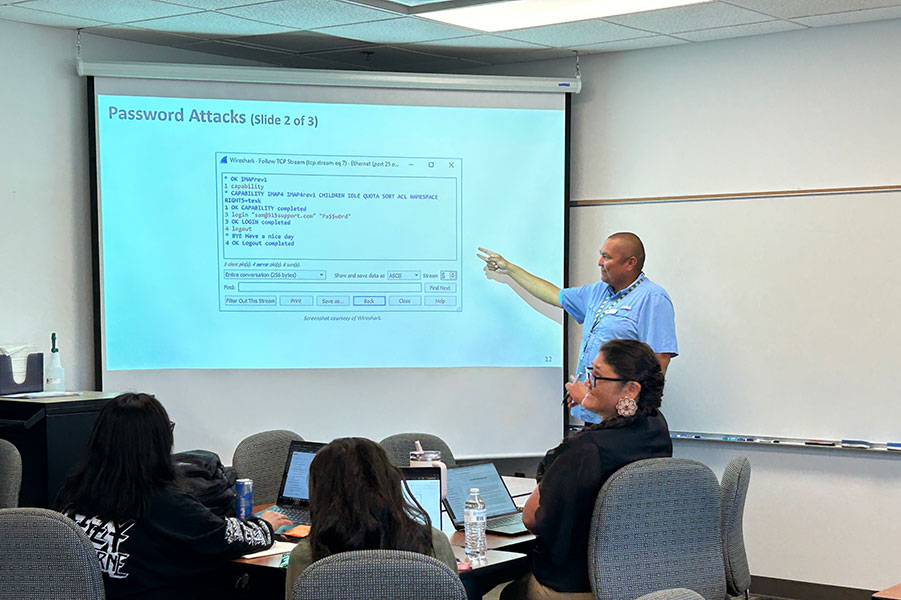
Cybersecurity careers offer strong job growth, high earning potential, and multiple entry points, even if you’re starting college for the first time or changing careers. This guide explains what cybersecurity professionals actually do, how much they earn, and how to enter the field through flexible pathways that meet employers’ needs.
What is Cybersecurity?
Cybersecurity involves principles and practices that Information Technology (IT) professionals use to protect computer systems, networks, and sensitive data from digital attacks, theft, and disruption. These threats affect almost every business and industry, including marketing, healthcare, finance, education, manufacturing, and government.
As businesses rely more on technology, employees with cybersecurity skills:
- Prevent data breaches
- Monitor systems for suspicious activity
- Respond to cyberattacks
- Ensure organizations meet security and compliance standards
Is Cybersecurity a Good Career?
As cyber threats grow, cybersecurity has become one of the most in-demand and resilient career fields in technology. In 2024, the Fortinet Cybersecurity Skills Gap Report found that 87% of business leaders said their company experienced a cybersecurity breach that could be attributed to a lack of skills in their organization.
This need for cybersecurity professionals means organizations are working to fill more than 4.7 million roles in the field. In the U.S. alone, there were over 500,000 job openings in 2024, per the 2024 ISC2 Cybersecurity Workforce Study.
Long-term employment opportunities are projected for those with cybersecurity skills. The Bureau of Labor Statistics (BLS) reports that Information Security Analyst roles are projected to grow 29% from 2024 to 2034, much faster than the average across all occupations.
What Can You Do in Cybersecurity Careers?
Cybersecurity professionals are needed everywhere—in hospitals, schools, tech companies, and government offices. Your daily tasks might include implementing best practices to find, fix, and prevent security weaknesses, as well as quickly responding to any breach attempts.
Types of Roles
Common entry-level and early-career cybersecurity jobs include:
- SOC Analyst Tier 1: Monitors security alerts, investigates potential threats, and escalates incidents when needed.
- Junior Penetration Tester: Helps test systems for vulnerabilities by attempting controlled, ethical hacks under supervision.
- Compliance Specialist: Ensures organizations follow cybersecurity laws, regulations, and internal security policies.
These roles are also stepping stones into more advanced cybersecurity positions. As your career advances, you may move up to Tier 2 SOC analyst roles and grow into positions with greater responsibility, like a cybersecurity engineer or administrator managing entire networks or systems, or an IT manager leading teams of cybersecurity analysts.
Salaries for Cybersecurity and IT Professionals
Salaries will vary based on where you live and if you have certifications or relevant skills, but cybersecurity salaries are often above average, even at the entry level.
National average salaries in 2024 in the U.S. for cybersecurity-related roles, according to the Bureau of Labor Statistics:
| Role | Average annual salary |
|---|---|
| Computer support specialist | $61,550/year |
| Network and computer systems administrator | $96,800/year |
| Information security analyst | $124,910/year |
| Computer network architect | $130,390/year |
Important note: Many professionals start in IT roles and move into cybersecurity as they gain experience — a common and realistic pathway for adult learners.
How Do You Get Into Cybersecurity?
There is no single “right” path into cybersecurity. In fact, 40% of cybersecurity employees have less than a bachelor’s degree, showing employers may be prioritizing skills, certification, and experience alongside formal education.
Depending on your background and goals, common ways to start a cybersecurity career include:
- Earning an IT or cybersecurity certificate
- Completing an associate or bachelor’s degree
- Starting in IT support and transitioning into security
- Building experience through hands-on learning and certifications
Associate or Bachelor's Degrees
A traditional pathway to cybersecurity careers is pursuing an associate or bachelor’s degree in cybersecurity, or in computer science or information technology with a specialization in cybersecurity.
- Associate Degree (Two Years): An Associate of Sciences (AS) or Associate of Applied Sciences (AAS) degree can build foundational knowledge in networking, programming, and systems, all critical for cybersecurity roles.
- Bachelor’s Degree (Four Years): Some cybersecurity positions, especially advanced leadership roles, may require a bachelor’s degree in cybersecurity or information technology, such as a Bachelor of Science (BS).
Tip: Explore San Juan College’s AS in Computer Science and Online AAS in Information Technology programs, and read our blog, Is Earning an Associate Degree Worth It?
Pivot With a Flexible Certificate
For working students or students returning to school, shorter, flexible credentials can be the fastest way to enter information technology and cybersecurity. Fortinet found that more than 90% of employer respondents prefer hiring candidates with certifications.
At San Juan College, the 30-credit Cybersecurity Support Certificate and other IT certificates serve to build hands-on skills for entering technology roles.
How to Transition to a Cybersecurity Career Without Starting Over
Many career changers successfully pivot their skill sets to the cybersecurity industry in cost- and time-efficient ways. If you exemplify problem-solving or technical skills in your current job, you can build on your expertise to pursue new opportunities.
- No college: Your transferable skills, plus strategically earning industry certifications, mean you can enter the cybersecurity field as a career changer.
- Some college: Check transfer admissions at local colleges and universities to see if prior education counts toward a degree. Another option is to contact a community college about completing an associate degree first, which is often a smart financial and academic move.
Cybersecurity values continuous learning, with a range of industry certification pathways available that help IT professionals demonstrate cybersecurity expertise. This makes education readily available and makes these roles among the most accessible for career changers.
Tip: We know career changers. Read our blogs about going back to school as an adult and how to make the most of your education and experience when changing your career.
Frequently Asked Questions
Information Technology (IT) focuses on building, maintaining, and supporting technology systems, such as networks, hardware, software, and user support. Cybersecurity is a specialized area within IT that focuses specifically on protecting those systems and the data they hold from cyber threats.
Artificial intelligence is already becoming part of cybersecurity work, with Cyberseek reporting that 10% of cybersecurity job postings reference AI-related skills as a requirement. Rather than replacing jobs, AI is expanding the need for skilled professionals who can manage, interpret, and secure AI-driven systems.
A cybersecurity analyst may work under a supervisor or among a team of other analysts to implement cybersecurity procedures on a company’s computer security systems, whether it’s in a physical building or a remote workforce. Daily tasks may include looking for vulnerabilities or investigating security alerts.
No. While some cybersecurity roles require a bachelor’s degree, many entry-level positions are open to candidates with certificates, associate degrees, or relevant experience. Many professionals start in more generalized IT roles and transition into cybersecurity as they gain skills and experience.
The timeline depends on your pathway:
- Certificates: Often completed in a few months to one year
- Associate degrees: Typically two years
- Bachelor’s degrees: Typically four years
- Career changers: Many enter IT roles first and move into cybersecurity within 1–3 years
Certificates can be a strong investment. They are often more affordable than full degree programs, and many students combine funding sources to cover costs. Common ways to pay include federal financial aid, workforce or employer tuition assistance, scholarships, and payment plans.
Read our blog about attending community college for free in New Mexico and our guide to community college financial aid to learn more.
While technical skills like networking fundamentals and the use of security monitoring tools matter, employers also value transferable skills, such as attention to detail, critical thinking, communication, and problem-solving under pressure.
Community colleges often provide shorter, career-focused courses and certificates, giving you workforce-tailored instruction without requiring a full degree. You can always continue to an associate degree later. Benefits include affordable tuition, smaller class sizes, and strong career support services.
Pursue a Secure Future at San Juan College
Starting a career in cybersecurity offers long-term stability, strong earnings, and multiple entry points. Whether you’re starting college for the first time or pivoting into an in-demand field, the IT Certificates and AAS in Information Technology at San Juan College can help you take the next step with cybersecurity skills.
Contact us today to learn more about our education and training programs in cybersecurity, information technology, and computer science.